Questions to Ask Before Joining a Software Training Course
Skills IT Academy Content Team
October 29, 2026
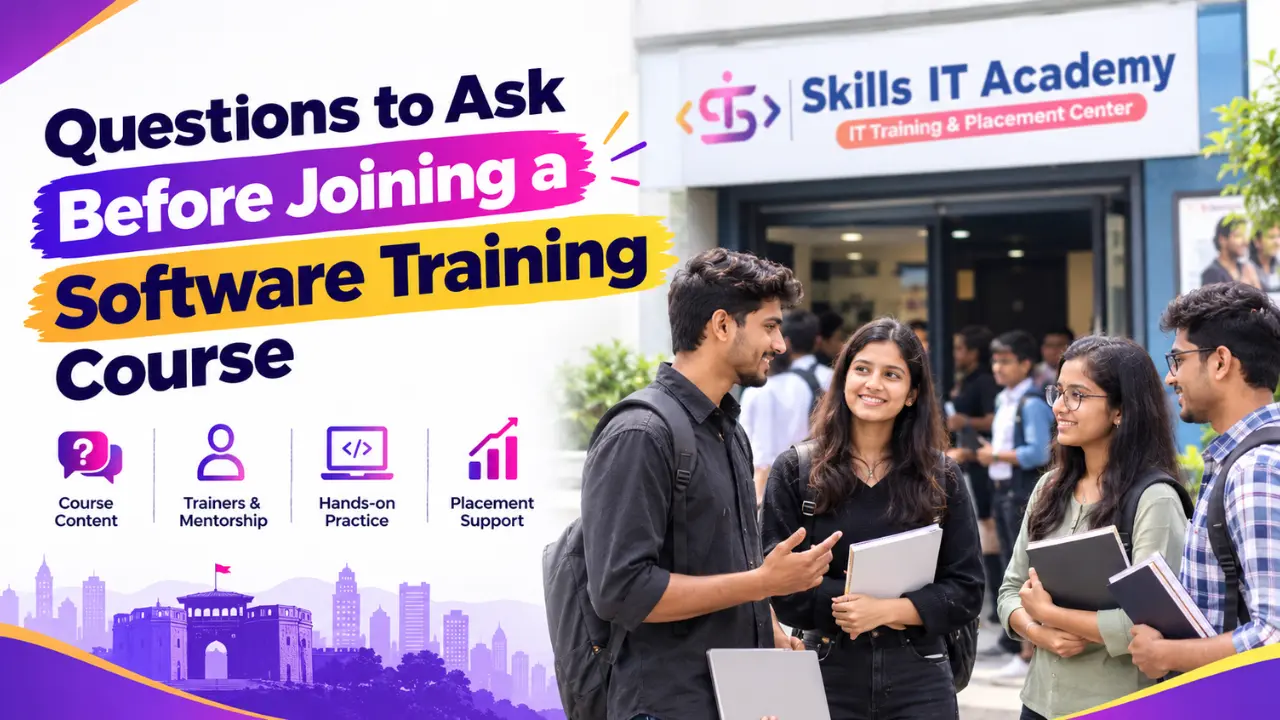
Choosing the right software training course is an important step for students, freshers, and working professionals who want to build a career in the IT industry. With multiple options available, including Full Stack Development, Python Programming, Software Testing, Data Science, Data Analytics, DevOps, and Cloud Computing, selecting the right course can feel confusing.
A good software training course should help you understand technical concepts, develop practical skills, work on projects, and prepare for real-world IT challenges. Before enrolling, it is important to evaluate the course syllabus, trainer experience, teaching methods, practical training, fees, and career support.
If you are planning to join a software training course in Pune, asking the right questions can help you make an informed decision.
In this guide, we will explore 10 important questions to ask before joining a software training course.
1. Does the Course Match My Career Goals?
Before choosing a software training course, identify your interests, current skill level, and career objectives. Different courses prepare learners for different technical roles.
For example:
- Full Stack Java Development: Suitable for learners interested in programming and web application development.
- Python Programming: Useful for learners interested in programming, automation, and application development.
- Software Testing: Relevant for those interested in quality assurance, manual testing, and test automation.
- Data Science: Suitable for learners interested in programming, statistics, and data-driven problem-solving.
- Data Analytics: Useful for understanding datasets, identifying trends, and preparing reports.
- DevOps and Cloud Computing: Relevant for learners interested in deployment, infrastructure, automation, and cloud technologies.
Before enrolling, ask whether the course aligns with your career interests and the skills required for your preferred role.
What to ask: Which technical skills and job roles can this course help me prepare for?
2. Is the Course Syllabus Updated and Industry-Relevant?
Technology evolves continuously, so reviewing the syllabus is essential before paying course fees.
Ask for a detailed curriculum that explains the topics, tools, frameworks, and practical exercises included in the course.
For example, a full-stack Java development course may cover Java fundamentals, object-oriented programming, databases, backend development, and web technologies. A software testing course may include test case design, defect reporting, testing methodologies, and automation tools, depending on the curriculum.
What to ask: Can I review the complete syllabus, and how frequently is it updated?
Compare the syllabus with your learning objectives instead of choosing a course based only on its name.
3. Do the Trainers Have Relevant Technical Experience?
Trainers play an important role in helping students understand technical concepts and solve problems.
Before joining, ask about the trainer's technical background, industry experience, teaching experience, and familiarity with the technologies covered in the course.
A good trainer should explain complex concepts clearly, demonstrate practical examples, answer questions, and help learners understand how to apply their knowledge.
If possible, attend a demo class to evaluate the teaching style before making a decision.
What to ask: Who will teach the course, what experience do they have, and can I attend a demo session?
4. Does the Course Include Hands-On Practical Training?
Learning theory alone may not be sufficient to develop technical confidence. Practical exercises allow students to apply concepts and improve their problem-solving skills.
Depending on the course, practical training may include writing code, debugging applications, executing test cases, analyzing datasets, or configuring deployment workflows.
Ask how much time is dedicated to practical exercises and whether students receive opportunities to practice independently.
What to ask: How much of the course involves hands-on practice compared with theoretical instruction?
5. Will I Work on Real-World Projects?
Projects help learners apply their knowledge and demonstrate their technical abilities.
Examples include developing a web application, creating a Python program, testing a software application, analyzing a dataset, or practicing a cloud deployment workflow.
Before enrolling, find out how many projects are included, whether you will complete them independently, and whether trainers will provide feedback.
What to ask: What projects will I complete, and will I receive guidance while working on them?
6. What Is the Course Duration and Class Schedule?
Course duration and class timings are important for college students, freshers, and working professionals.
Confirm the total duration, weekly schedule, session timings, and expected practice time outside class. Ask whether weekday, weekend, online, or classroom batches are available, if applicable.
Also clarify the process for attending missed sessions and accessing learning materials.
What to ask: How long will the course take, and what options are available if I miss a class?
7. What Are the Total Course Fees?
Course fees are an important consideration, but cost should not be the only factor in your decision.
Request a complete fee breakdown and check whether study materials, practical sessions, project work, certifications, examinations, or other services involve additional charges.
Compare training programs based on their syllabus, teaching quality, practical opportunities, trainer support, and included facilities.
Before paying, review the payment schedule, installment options, refund policy, and enrollment terms.
What to ask: What is the total course fee, what does it include, and are there any additional charges?
8. Does the Institute Provide Placement Assistance?
Many students join software training courses to prepare for employment opportunities. However, placement assistance does not necessarily mean guaranteed employment.
Ask whether the institute provides resume guidance, mock interviews, technical interview preparation, aptitude practice, project presentation guidance, or job-search support.
If placement assistance is advertised, clarify the services included and any eligibility conditions. Request verifiable information about previous student outcomes where available.
What to ask: What placement assistance is provided, and how can I verify the institute's placement claims?
Remember that employment outcomes also depend on your skills, practice, interview performance, and available job opportunities.
9. Will I Receive Support When I Have Questions?
Students may need additional guidance when learning programming, resolving errors, understanding difficult topics, or completing projects.
Ask how doubts are addressed and whether trainers are available for additional assistance outside scheduled classes.
You can also inquire about revision sessions, practice assignments, learning materials, and project support.
What to ask: How can I get help when I struggle with a technical concept or project?
10. Can I Verify Student Reviews and the Institute's Reputation?
Before joining a software training course, research the institute and evaluate the experiences of previous students.
Read reviews that discuss teaching quality, syllabus coverage, practical training, trainer support, and the overall learning experience.
Look for consistent feedback across different sources instead of relying only on promotional testimonials. Where possible, speak with former students and visit the training center to understand the learning environment.
What to ask: Can I review credible student feedback or speak with former students before enrolling?
Additional Checklist Before Joining a Software Training Course
Use this checklist to compare your shortlisted training institutes:
- Review the complete course syllabus.
- Verify the trainer's experience and teaching approach.
- Check the availability of hands-on training and projects.
- Confirm the course duration and batch timings.
- Understand the complete fee structure.
- Clarify placement assistance and interview preparation.
- Ask about doubt-solving support and missed classes.
- Review student feedback and verify important claims.
- Read the enrollment terms before making payment.
Taking time to evaluate these factors can help you select a course that matches your learning needs and career objectives.
Explore Software Training Courses at Skills IT Academy in Pune.
If you are looking for software training in Pune, you can explore the courses offered by Skills IT Academy and compare them with your career goals.
Some available course pages include:
- Full Stack Java Development: Explore the Full Stack Java Development course.
- Python Programming: Learn more about the Python Programming course.
- Data Science: Explore the Data Science with Python course.
You can also inquire about software testing, data analytics, DevOps, and cloud computing training to confirm current course availability and curriculum.
Before enrolling, contact the institute to verify course fees, duration, batch timings, syllabus, practical project opportunities, and placement assistance, where applicable.
Visit Skills IT Academy to explore its software training options in Pune.
Frequently Asked Questions
1. What should I check before joining a software training course?
Review the syllabus, trainer experience, practical training, project opportunities, course duration, fees, student reviews, and career support before enrolling.
2. Which software training course is suitable for beginners?
The right course depends on your interests and career goals. Beginners can explore programming, software testing, data analytics, or other technical fields after reviewing the course prerequisites and syllabus.
3. Is practical training important in software courses?
Yes. Practical exercises and projects help learners apply technical concepts, practice problem-solving, and gain experience with relevant tools and technologies.
4. Should I attend a demo class before joining?
A demo class can help you evaluate the trainer's teaching style, the clarity of explanations, and whether the learning approach meets your needs.
5. Do software training institutes provide placement assistance?
Placement support varies by institute and course. Ask about interview preparation, resume guidance, job-search support, eligibility conditions, and verifiable placement information.
6. How do I choose a software training institute in Pune?
Compare course content, trainer qualifications, practical learning opportunities, fees, student feedback, and available support. Choose a program that aligns with your learning needs and career objectives.
Conclusion
Choosing the right software training course requires more than comparing fees or selecting a popular technology. Students should evaluate the syllabus, trainer experience, practical training, project work, class schedules, career support, and student feedback before enrolling.
Asking these 10 questions can help you understand what a training program offers and whether it matches your career goals.
Whether you are interested in Java development, Python programming, software testing, data science, data analytics, DevOps, or cloud computing, focus on developing a strong technical foundation and applying your knowledge through practical work.
If you are planning to join a software training course in Pune, research your options, compare available programs, and clarify important details before making your decision.